
7 January, 2026
The European AI Act 2026, what does it mean for your business continuity?
Read more
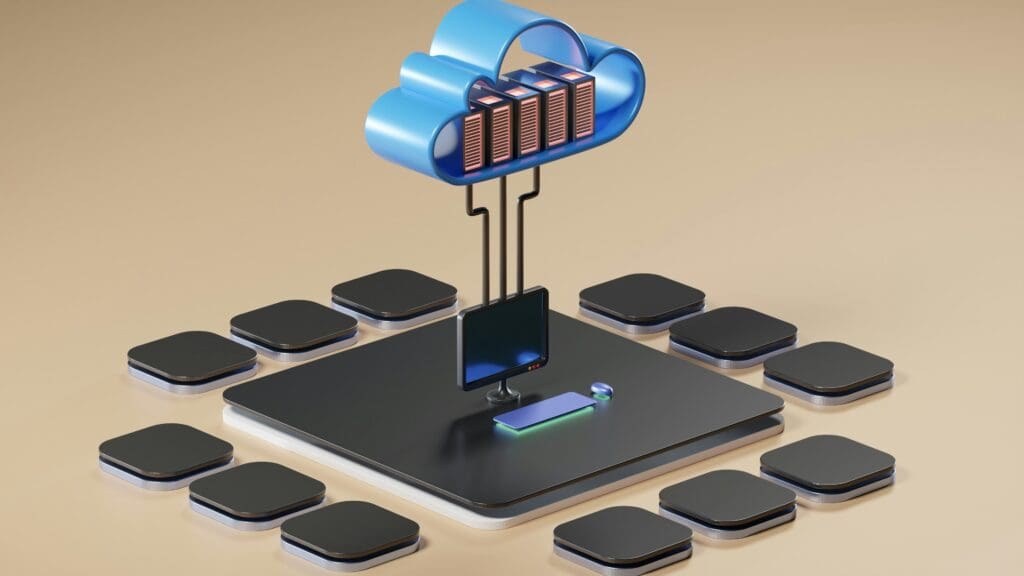
As a tech company, you most likely store your source code in a repository (Git, etc.) and run automated daily backups. But what if your cloud provider (hosting provider) goes bankrupt tomorrow? Or if a cyber incident takes down your data center for days? This question keeps many IT managers awake at night and, for good reason. Because if you can no longer deliver your services to your customers, you have a serious problem.
Chain liability in the cloud isn’t just about technical measures, it’s primarily about maintaining control over what matters most: your service delivery to customers and their business continuity.
As a tech provider, it’s crucial to stay vigilant about chain liability in the cloud, because your operations and reputation directly depend on parties over which you have limited control.
The concentration of cloud services among a handful of dominant, often non-European providers creates a risk that regulators such as the AFM, DNB, and the Dutch Data Protection Authority now openly acknowledge: systemic risks due to digital dependency. When a cloud platform goes down, suffers a cyberattack, or becomes entangled in geopolitical tensions, both your service delivery and that of your customers grinds to a halt.
The problem lies in the chain: you serve customers, but you yourself run on someone else’s infrastructure. During a disruption, you’re often dependent on the speed and goodwill of that underlying provider, while your own customers (quite rightly) come knocking on your door. You may be able to protect yourself contractually, but reputational damage and customer relationships can’t be written off in terms and conditions.
That’s why, as a tech provider, you need to think ahead about redundancy, exit strategies, and transparency toward your own customers. Because in the chain of dependencies, you’re both a supplier and a customer and, when things go wrong, the question is who ultimately bears the cost.
Vendor lock in is arguably the greatest risk for cloud customers. It occurs when organizations become so deeply integrated into the technology, formats and protocols of a single provider that switching becomes technically complex and financially unfeasible. Examples include proprietary APIs, specific database formats or applications that only run on a particular cloud platform.
The consequence is a loss of leverage. Providers can raise prices, discontinue features or terminate services, leaving customers with few alternatives. Over time, internal IT expertise may also decline because responsibility increasingly sits with the provider, making effective risk assessment and control more difficult.
An outage at your cloud provider immediately impacts your business operations. Whether caused by a cyberattack, hardware failure or human error, the consequences are often significant. For startups and scale ups with limited resources, even a single day of downtime can lead to revenue loss, reputational damage and customer dissatisfaction.
And outages are not the only concern. In the event of a bankruptcy or acquisition, services may be discontinued altogether. If your provider suddenly ceases to exist or is acquired by a party that shuts down the product, your business may be left without access to its own systems and data.
US cloud providers may be subject to the US CLOUD Act, which can require them to provide access to data held overseas, including data stored in Europe. Sanctions or trade restrictions may also result in services becoming unavailable to specific regions or sectors. For organizations handling sensitive data or operating internationally, this represents a real and growing risk.
Cloud providers typically rely on subcontractors and third parties for parts of their infrastructure. This includes data centers, network providers, security services and software libraries. These supply chains are often complex and opaque. A vulnerability at any point in the chain, such as a flaw in an open source component, can affect your systems without immediate visibility.
One way to reduce vendor lock in is to distribute workloads across multiple cloud providers or combine public cloud with on premises infrastructure. This increases flexibility and bargaining power, but also adds complexity and requires additional expertise.
Choose solutions based on open standards such as SQL, Linux and Kubernetes rather than proprietary technologies. By containerizing applications using Docker and orchestrating them with Kubernetes, workloads become portable across cloud environments, enabling faster transitions if needed.
Exit planning should begin before contracts are signed. Clear agreements on data portability, availability, security and audit rights are essential. Know how your data can be exported, in which formats and within what timeframes. A well defined exit strategy prevents unpleasant surprises later.
This is where escrow comes into play. SaaS Escrow and Data Escrow provide legal and technical safeguards that ensure continued access to essential software, source code and data if a supplier fails.
In a traditional source code escrow arrangement, source code is deposited with an independent third party. When a release event occurs, such as bankruptcy or termination of support, customers gain access to the code and can maintain or continue the software themselves.
For cloud applications, escrow must go further. Access is also required to configurations, infrastructure as code, containers, databases and API credentials. A comprehensive SaaS Escrow solution secures these elements and enables continued operation, in some cases even without downtime.
Escrow4all is a ISO 27001 certified escrow provider in the Benelux offering specialized digital escrow solutions that combine technical safeguards with clear legal frameworks for release conditions. This gives startups and scale ups confidence that their technology investments are protected regardless of what happens to their supplier.
Sensitive data in the cloud should be encrypted, with encryption keys managed by the customer. This reduces the risk of unauthorized access by providers or third parties and is particularly important for organizations subject to GDPR obligations or handling confidential information.
Supply chain security begins with awareness. As a founder or IT leader, it is essential to ask the right questions:
If the answer to any of these questions is no or unclear, it is time to take action. Supply chain security is not a one time project, but an ongoing process of risk assessment, contract management and technical preparedness.
The cloud offers tremendous opportunities, but it requires a different approach to risk and continuity. As a customer, you are not powerless. By making informed choices, you can reduce dependency and strengthen resilience. Invest in open standards, define exit strategies and consider escrow as a safety net for your most critical systems.
Ultimately, it comes down to one thing: maintaining control over what you have built. Your source code, your data, your business. That deserves protection today, tomorrow and in the future, just to be sure.

Looking for innovative escrow solutions?
Contact us now.